



AMALFI
An ancient maritime republic nestled between a cathedral, lemon groves, and the Mediterranean.
An exceptional
escape
Why choose this journey
Amalfi serves as an excellent base for exploring the Amalfi Coast while staying in a town with genuine historical depth. Unlike a mere seaside resort, it combines maritime heritage, a major cathedral, museums, beaches, an artisanal tradition, and direct access to several hiking trails. Couples will appreciate its hotels perched above the sea, its panoramic restaurants, and its evening strolls, while families can easily alternate cultural visits, boat excursions, and days by the water. Its ferry terminal and bus network also allow access to Positano, Ravello, Atrani, Maiori, or Salerno without needing to rent a car. Amalfi is thus suitable for both a romantic getaway and a more comprehensive stay dedicated to the culture, gastronomy, and landscapes of Campania.
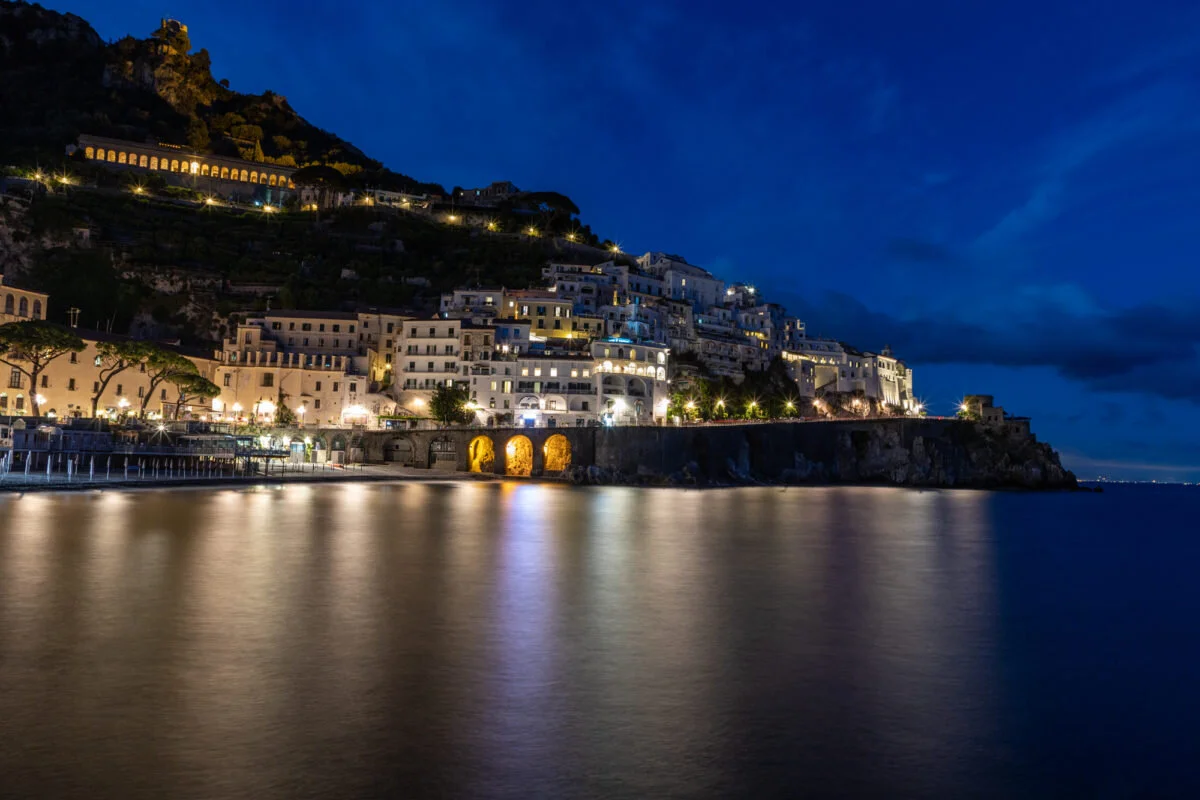
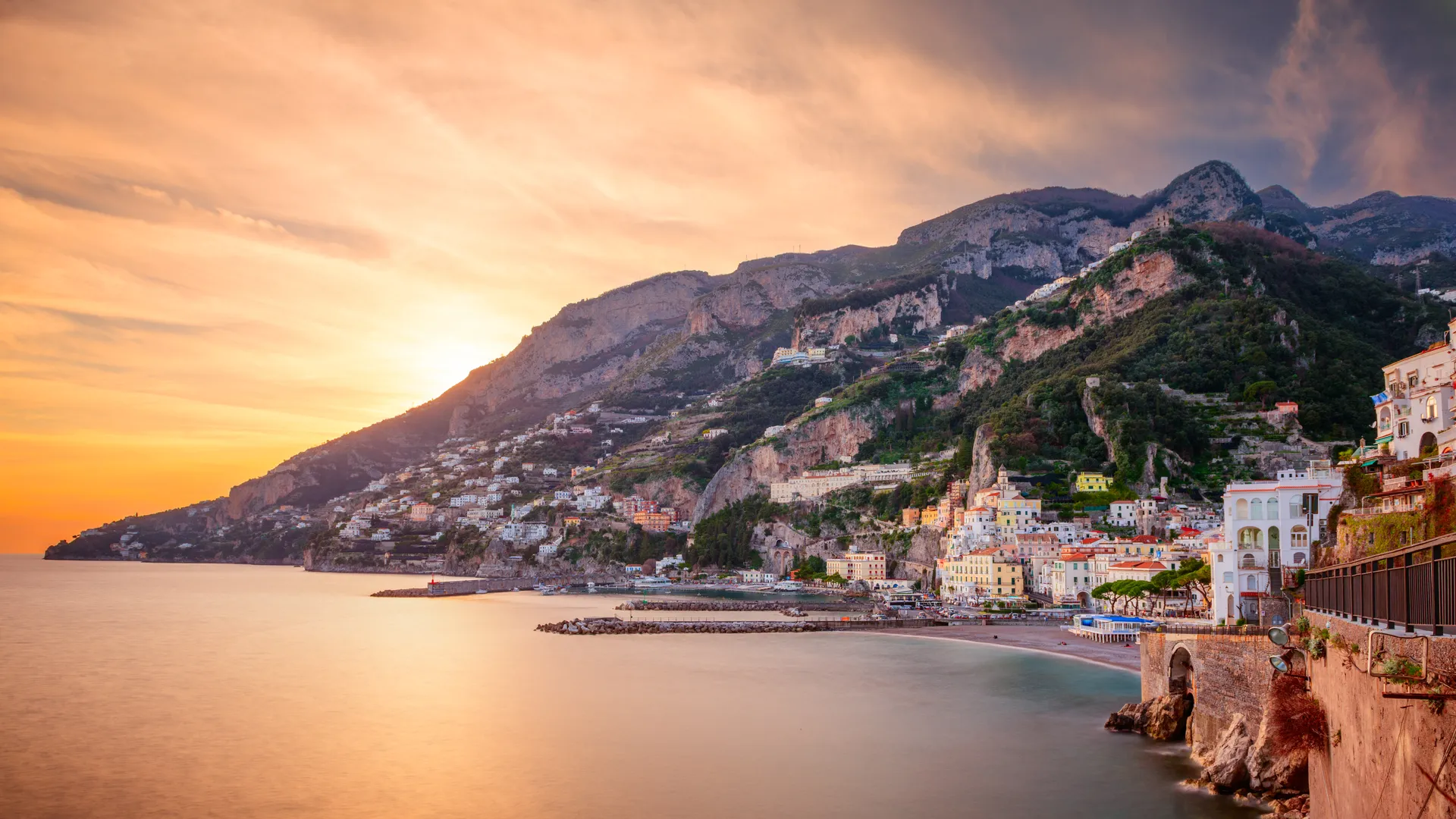
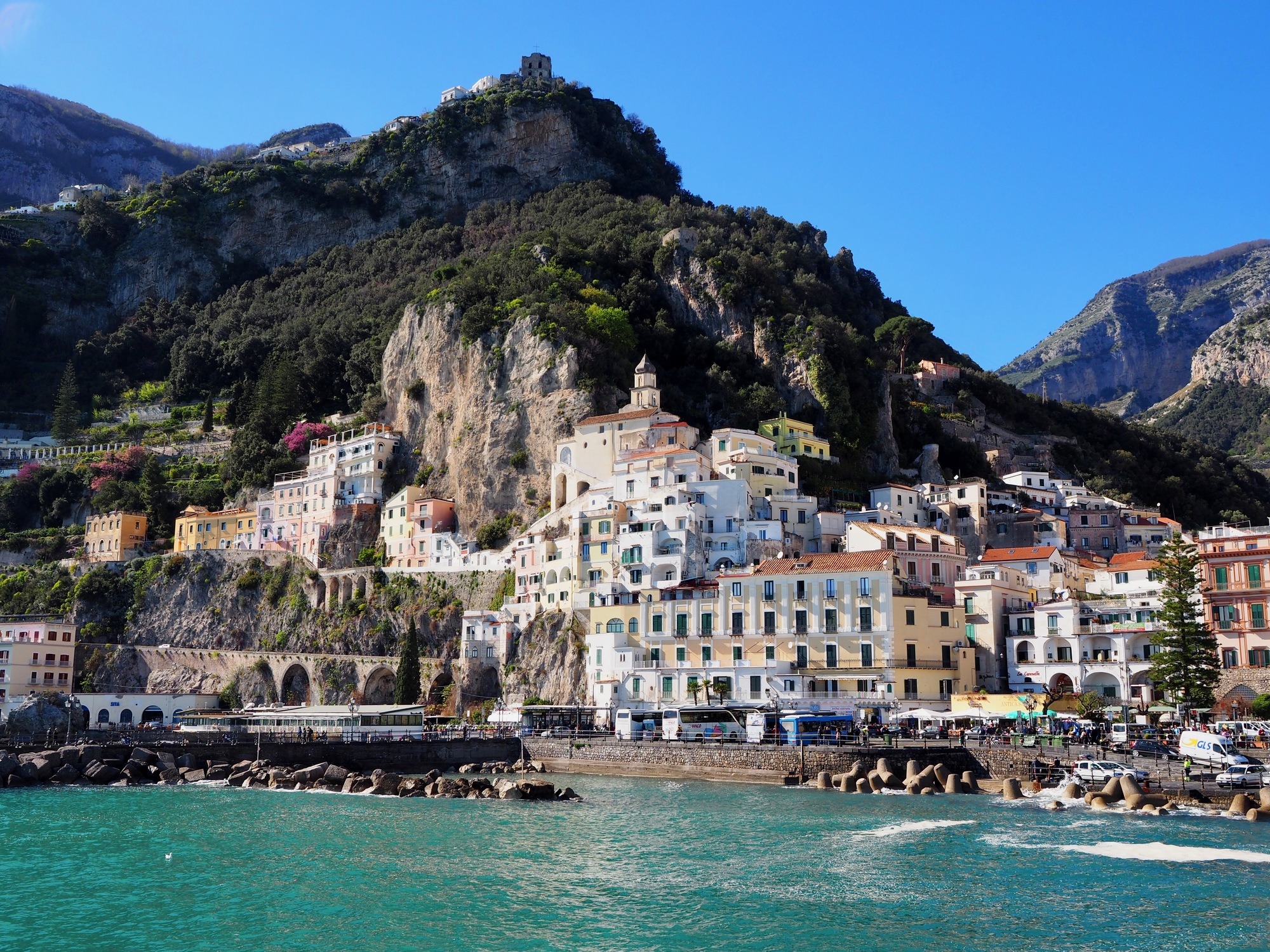
Nestled at the end of a spectacular valley opening onto the Tyrrhenian Sea, Amalfi gives its name to the entire Amalfi Coast. The town is surrounded by cliffs, terraced gardens, and lemon groves that descend towards the port. It belongs to the cultural landscape of the Amalfi Coast, inscribed as a UNESCO World Heritage site since 1997 for the remarkable association between the natural environment, historic villages, and human adaptation to a particularly steep terrain.
An ancient commercial power of the Mediterranean, Amalfi retains many traces of its past as a maritime republic. Its most emblematic monument remains the Saint Andrew’s Cathedral, which dominates the Piazza Duomo with its polychrome facade, monumental staircase, bell tower, and its famous Cloister of Paradise. The ancient Arsenal of the Republic, now associated with the Museum of the Compass and the Maritime Duchy, recalls the historical importance of navigation, while the Paper Museum showcases an artisanal tradition that long contributed to the town’s renown.
The historic center forms a labyrinth of vaulted passages, narrow alleys, staircases, and small squares hidden behind the main commercial arteries. Around the town, trails wind through old paper mills, waterways, and remarkable plant landscapes up to the Valle delle Ferriere, recognized as a biogenetic reserve. The beaches near the port allow for alternating visits and swimming, while the paths leading to Atrani, Pontone, or the heights reveal a quieter, more natural side of the destination.
Amalfi can also be discovered through the flavors of Campania: fish, seafood, fresh pasta, pastries, and specialties prepared with the sfusato amalfitano, the characteristic lemon of the coast. Its port facilitates maritime excursions to Positano, Salerno, and several neighboring localities, allowing visitors to explore the coastline without relying exclusively on the coastal road. Very lively in summer, the town reveals a more peaceful atmosphere in spring and autumn, when temperatures remain pleasant and the alleys are less crowded.
Unforgettable moments
- Central location on the Amalfi Coast
- Cultural landscape listed as a UNESCO World Heritage site
- Ancient maritime republic
- Saint Andrew's Cathedral
- Cloister of Paradise
- Piazza Duomo
- Arsenal of the Republic
- Museum of the Compass and the Maritime Duchy
- Paper Museum
- Historic alleys, vaulted passages, and staircases
- Port with maritime connections
- Beaches accessible from the center
- Valle delle Ferriere
- Trails to Atrani, Pontone, and the heights
- Terraces planted with lemon trees
- Campanian gastronomy
- Excursions to Positano, Ravello, and Salerno
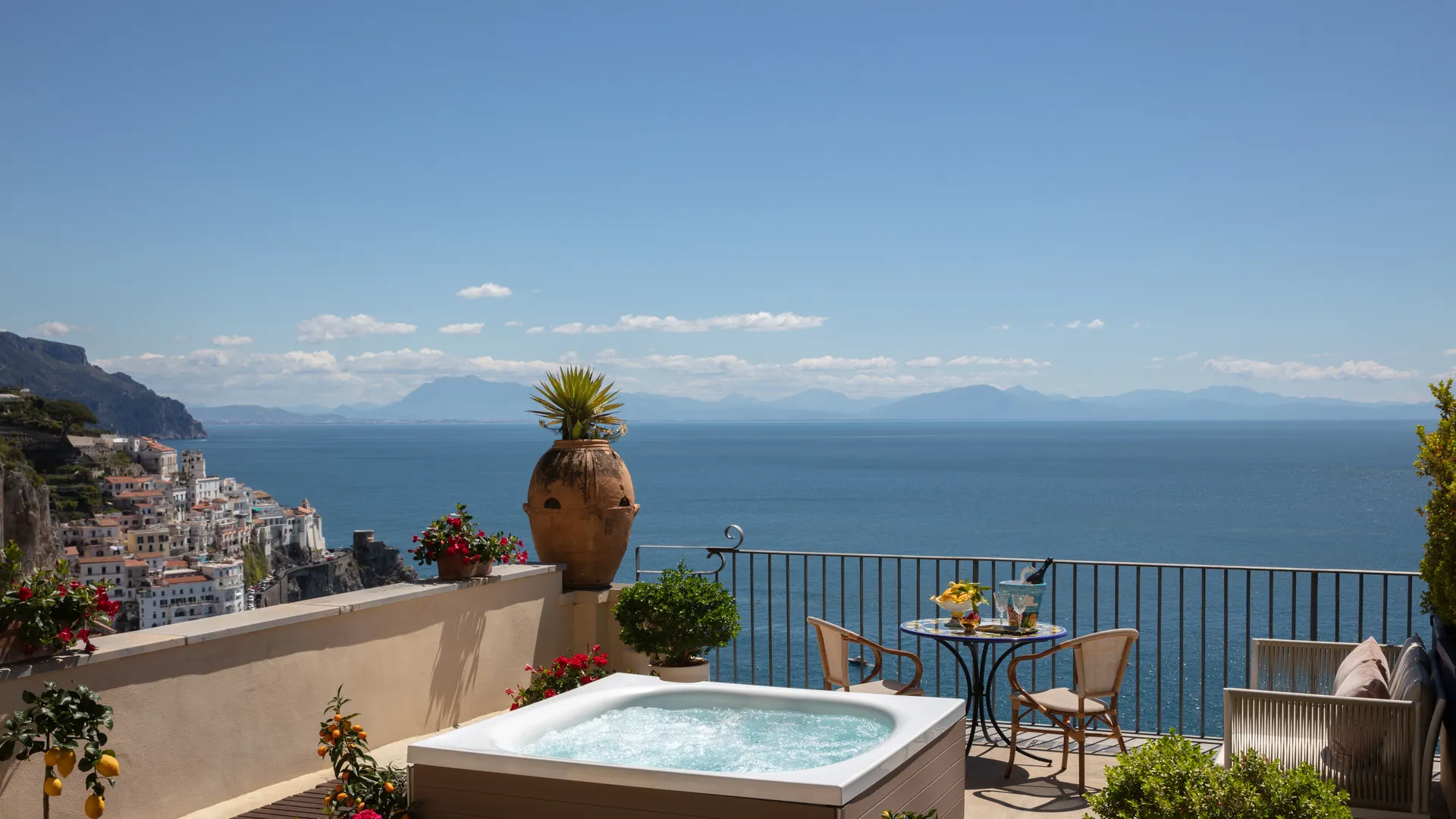
- Historic hotels with panoramic views
- Romantic destination
- Pleasant atmosphere off-season
Journey in pictures
On the map
Exceptional hotels
 🏨 Hotel
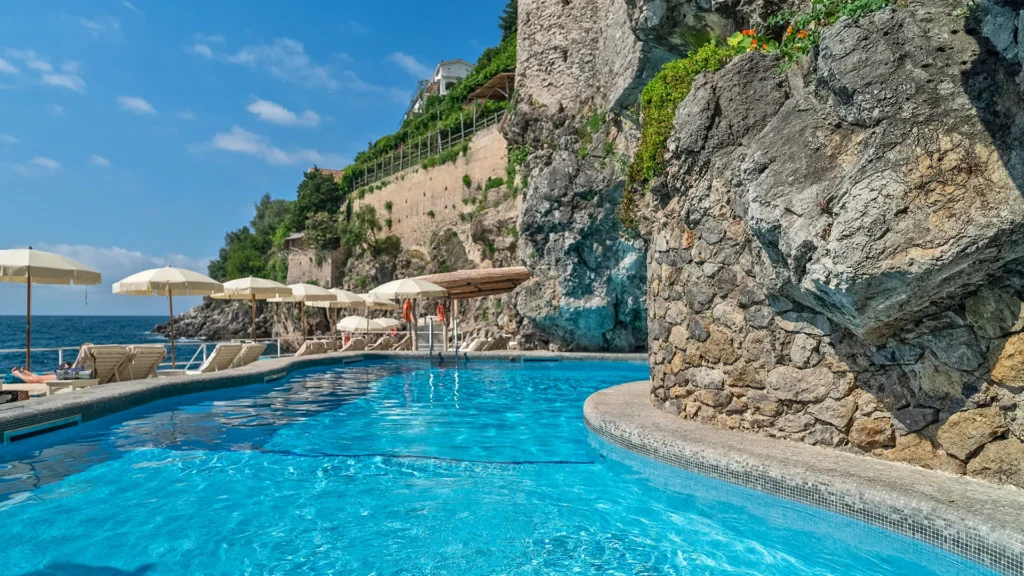
Hotel Santa Caterina
Amalfitan elegance suspended above an intensely blue and luminous Mediterranean.
 🏨 Hotel
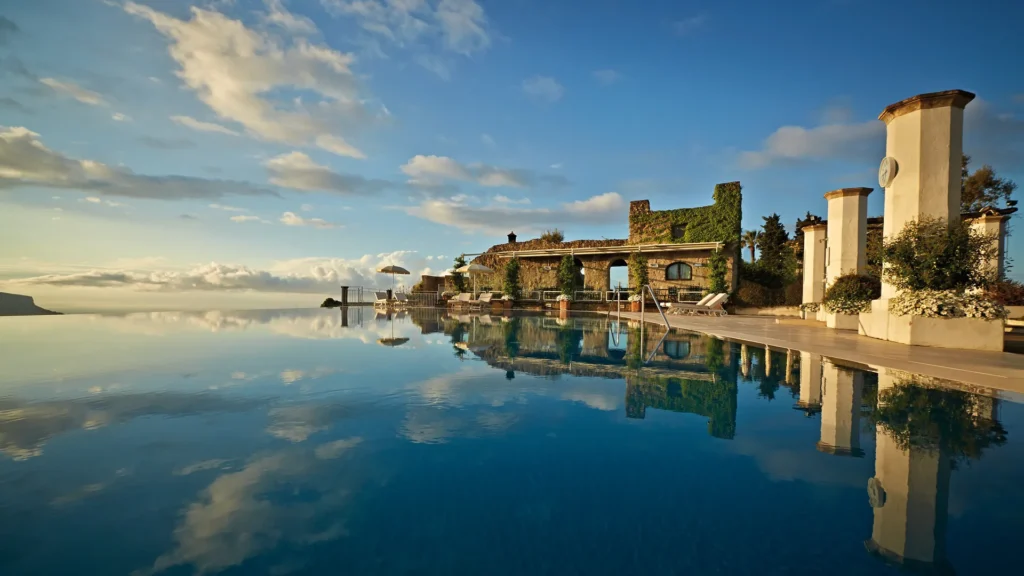
Caruso, A Belmond Hotel, Amalfi Coast
A palace suspended between gardens, an infinity pool, and the Mediterranean.
 🏨 Hotel
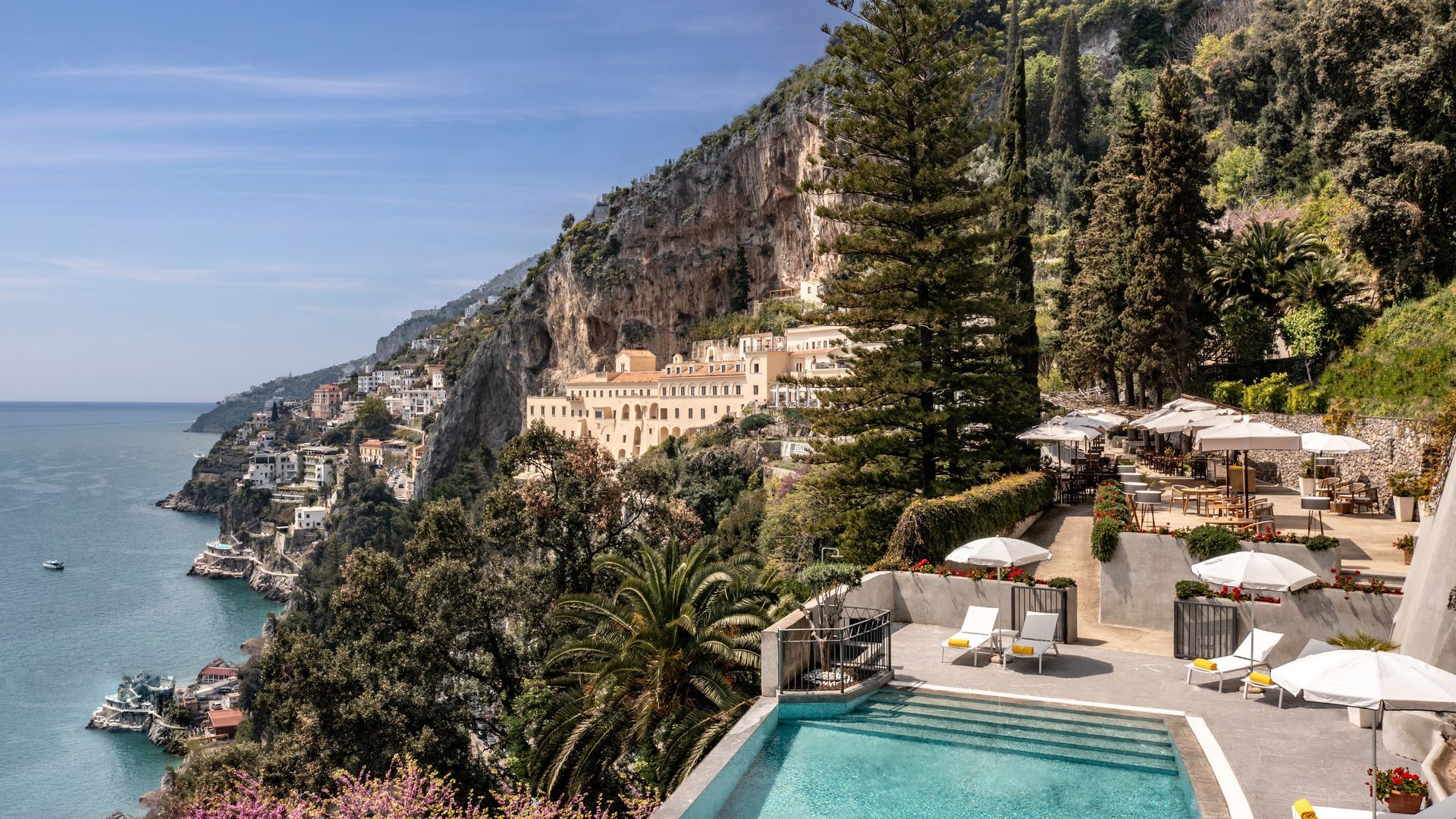
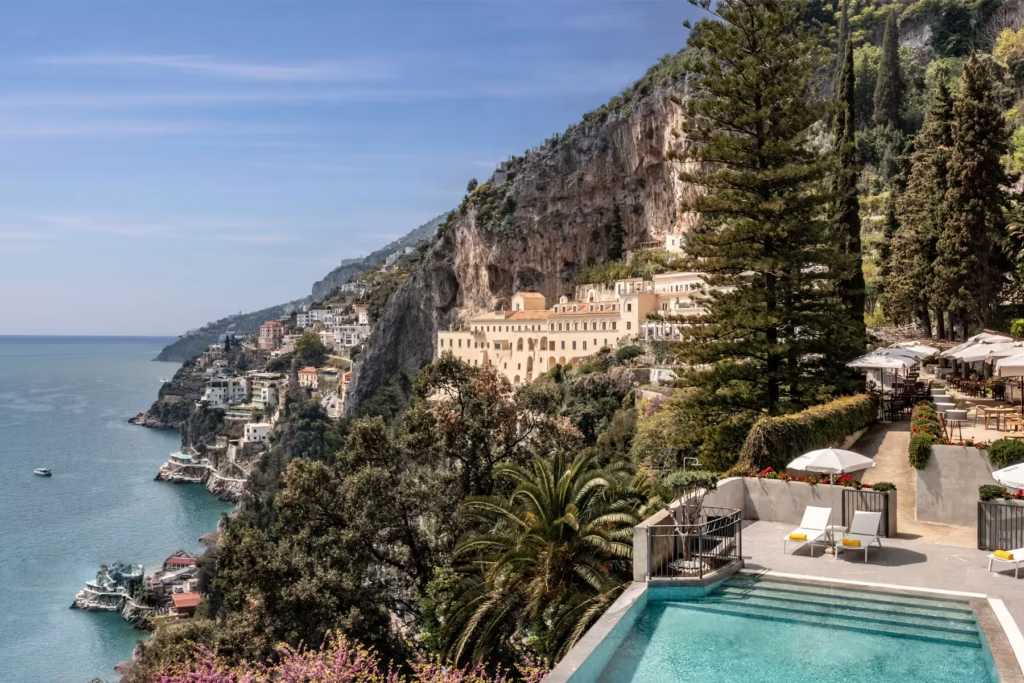
Anantara Convento di Amalfi Grand Hotel
An ancient convent suspended between sky, sea, and history.